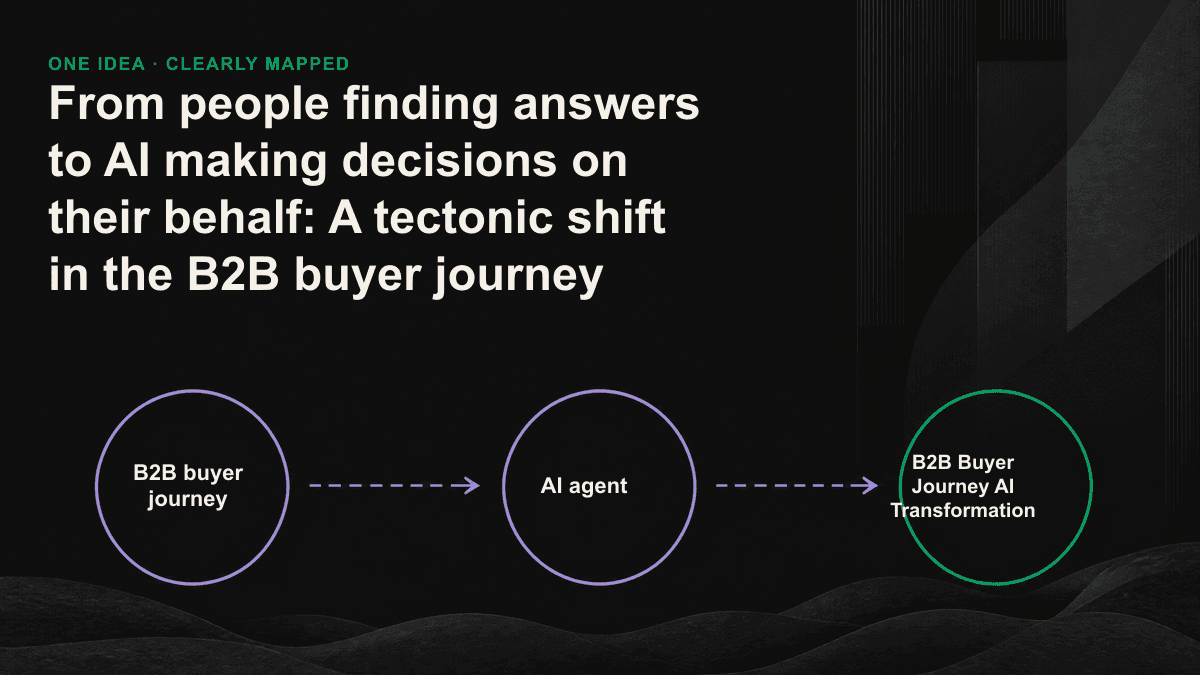
An entire section of the B2B buyer journey is being taken away. The research process that used to be done by buyers themselves by comparing, collecting, and eliminating page by page is now being handed over to AI agents. This means that the first person you want to persuade is no longer the person, but the machine that screens out most of the options for the person; if it cannot read you, the person will never be able to touch you.
It's not as simple as replacing the search box with a chat box. When a procurement executive types "What accounting software is suitable for a team of 30 people and can issue invoices and file taxes" on ChatGPT or Perplexity, the model will not throw him ten links and ask him to read them by himself, but will directly give him three to five options, with reasons and comparisons. What buyers see is the conclusion, not the process. The few hours of research time he saves are just the window through which you were originally seen, remembered, and persuaded.
The old funnel’s default was “There’s always someone who will read every page.”
Every step of traditional demand generation is based on the same assumption: a real person will click into your website, read the function page, download the white paper, read the customer case, and then silently add points for you in his heart. Every piece of copy we write and every transition line we design is prepared for this person. The trouble is, this person is outsourcing the most time-consuming part. The consensus in the industry that has been discussed for many years is that B2B buyers have completed most of the decision-making homework before formally contacting the business; the change now is that even this homework itself has been taken over by agents.
The middle part of the research is being handed over to the agent.
What AI agents do is exactly what buyers themselves used to do: translate vague requirements into specific conditions, collect information across multiple sources, cross-reference, eliminate unqualified ones, and leave a shortlist. The difference is that it's faster, less emotional, and less forgiving. A real person may take a second look at your official website because of its attractive design, but an agent will not; it will only recognize information that it can understand, verify, and quote.
- Translate the buyer's vague "What do I need" into specifications and conditions that can be compared item by item.
- Collect candidates across multiple AI engines and sources and instantly weed out those that are unclear and unclear about your brand.
- Use structured hard facts (pricing, integration, compliance, deployment methods) to do the first round of elimination. If you can't pass this level, you won't be on the shortlist.
- Organize the shortlist together with the reasons for selection and show it to others. Whether you can appear in the "reason" column will determine whether you take the next step.
Pay special attention to the last point. The agent lists who was selected and why. If your product is listed but does not have a decent reason, people will see an unconvincing option; if you are not even listed, there will be no chance to argue.
Brands that are filtered out will not receive any notifications.
Traditional funnels at least leave traces: bounce rates, half-filled forms, visitors who saw the pricing page but did not take the next step, are all signals that can be tracked and remedied. Agent-based filtering leaves no such trace. You won’t see “Forty buyers’ agents excluded you today” in any backend. The gap is invisible. By the time you reverse the decline in performance, you will often have lagged behind for a whole quarter.
This specific requirement for content and positioning
To be selected by an agency, your content must first be cleanly extracted and independently verified. This means a few very specific things: Who do you serve, what do you solve, and who are you not suitable for? Write them into clear sentences instead of hiding them in a marketing comparison; put the hard facts that agents exclude such as pricing, integration lists, compliance scope, and introduction timelines on pages that can be crawled, rather than locking them into PDFs that require filling out a form.
And consistency. The agent will cross-check across sources. If your official website, third-party reviews, and community discussions tell three sets of stories, the model will determine that the brand cannot tell who it is, and then move on to the next candidate. In an era when people can rely on a good business briefing to remedy vague positioning, this is okay; in an era when machines screen first, vagueness equals out.
In the buyer’s journey, people decide whether to buy or not, and machines decide whether you are qualified to be considered. In the past you just had to win the former, now you have to get through the latter.— Tenten GEO
What you should prepare now
Don’t rush to revamp the official website. Do a more basic thing first: ask your three to five most important buyers and actually ask ChatGPT, Perplexity and Google AI Overviews to see what options the agent will give, what reasons they use, and whether they include you. This list of gaps points out where the gaps are better than any internal brand discussion.
Next, take the hard facts that are most likely to be used by agents to exclude you: positioning, pricing logic, integration and compliance. Prioritize them, write them clearly, and put them in a position where they can be captured. This is a shift from "persuading people" to "first through machines, then persuading people". The earlier you start, the smaller the gap will be. If you want to know your current real visibility and gaps in these questions, you can book a 30-minute GEO diagnostic session, and we will take you through it with your actual questions.