The problem with most B2B sites is not too little, but too many dead pages. It took you three years to write 200 articles, 50 of which were never read, 40 fights, 30 expired to misreaders. These pages are not just lying quietly, they're diluting your thematic authority in the eyes of Google and AI engines. So when doing the content count, the quickest action is not to "write another one," but to remove the deleted, the combined collection, and the newer rescue.
Why is it more urgent than production?
When the AI engine pulls answers, you will find the "most sure" section on your website. If you have five pieces, five angles, five sets of contradictory numbers on the same subject, the engine will not help you pick the best one, it will reduce trust in the entire domain, and it will be able to quote a competing competitor. Dilution is not neutral, it has costs. When we're auditing clients, it's common for 20% of the pages before the flow to contribute more than 80% of the natural clicks and AI quotes, and most of the remaining long ends are towed bottles. Focusing resources on pages that can be cited first is much more effective than spilling water on average.
Paste a tag on each page
The first step in this exercise is to replace the main view with a clear decision. Each index page on the website is shown in a list, forcing you to choose one out of four and not to stop on the page. These four labels determine all the jobs that follow:
- Reservations (Keep): steady flow, conversion, accurate information, quoted in AI engine. Don't touch it.
- Update (Update): The theme is still important, ranked or quoted, but the content is out of date, insufficiently deep, and the format is unfavourable. It's the highest level of input, first.
- Merger (Merge): Two or more keywords, overlapping content, and weighting each other. Select one of the main pages to merge the essence of the other pages and transfer the rest of the 301 pages.
- Delete (Prune): No traffic, no conversion, no external connection, no theme or error. Directly lowers and transfers to the nearest related page, or returns 410.
What data to judge, don't feel.
Labeling does not make sense. It depends on several sets of cross-referenced indicators. A single number is easily miscalculated, for example, when the flow is low, it may be that it is quoted in the AI engine without a hit. We usually put these layers together:
- Search results: exposures, clicks, average rankings over the past six months, trends rather than single-month snapshots. The declining page is a sign of content decline.
- AI Citation Visibility: Have you been named in ChatGPT, Perplexity, Google AI Overviews? It's exactly what AI visibility monitoring's chasing, and it's a layer that traditional SEO tools can't see.
- Inter-site feeding: Checking for multiple pages with a keyword for the same query is the main basis for the merger.
- Content is fresh: Last update date, years and numbers mentioned in the text are out of date, and there are no invalid data links.
- Business values: Does the page have any queries or registrations for which part of the funnel? Low-flow but high-intensity pages need to be preserved and not deleted.
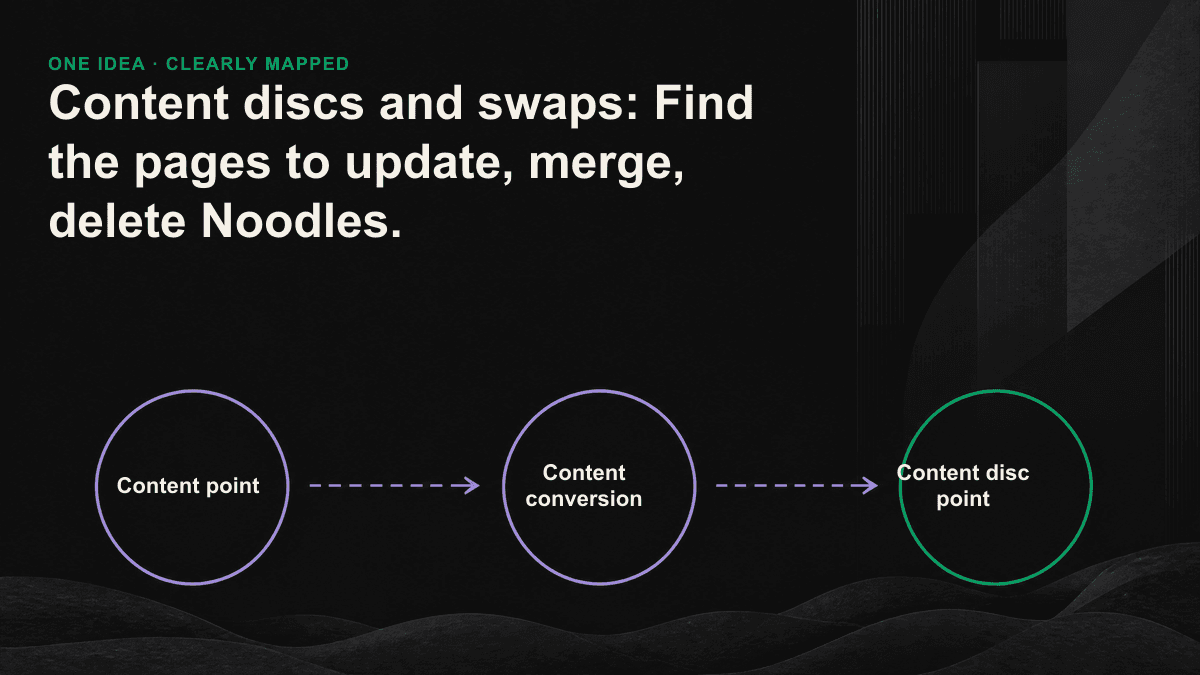
This update: Let old pages be re-referenced
Marks the page "updated" with the focus not on rewrite but on the structure that allows AI to quote. Bringing the core conclusions to the front so that the engine can remove the answer without reading the whole text; correcting the year, the version, the price of the expiry date; writing an independent paragraph at the bottom of each tab that can be drawn and read; and adding the last one that is really asked by the reader. Update the page to update the "final revision day" and resubmit the index so that the engine knows it is worth re-evaluation. The cost of getting the first page back is much lower than writing a new one from zero.
It's a merger: take away the diluted power.
Merging fixes competition between your own pages. When three articles all target "What is GEO?", each receives only a third of the links and trust, so none becomes strong. Choose the best-performing page with the cleanest URL, bring in the unique observations, cases, and diagrams from the other two, then permanently redirect the removed URLs to the main page with 301 redirects. The redirects consolidate accumulated authority and external links around one clear answer.
Delete: Remove pages that dilute quality or hold the site back.
Deletes are the most counterintuitive but often the most effective step. There are no pages that have been read, changed, and the theme is no longer relevant, leaving only those that make the engine feel that your website is of low quality and affects the comments of a good page. It takes a long time to read the deletion, and at least six months to one year without a change. When you really go down, if there's a close theme in the site, you move 301 to hold the residual value in the past; if you don't have anything to do with it and you don't want it to be indexed again, go back to 410 and tell the engine that it's gone forever. To delete the page, the crawler budget is redistributed to a really important content.
The content point is not cleaning, it is the distribution of resources. Every dead page you've sent away is a piece of trust for a good page.— Tenten GEO Content Review Principles
There's a rhythm after the plate, not a one-time feature. Case
The content will decline, so the count cannot be done only once. In practice, we suggest that it be a fixed rhythm: a fresh examination of 20% of the core pages before the flow is done every quarter, a full-stop merger and a deleted scan every six months, and that the new content go back three months to see if it is on the quoted track. Turning this thing into a calendar of routines will make the repository more effective, not heavier. If you want to know which pages on your website are slowing down, which ones are worth saving, and which ones are worth saving, you can schedule a 30-minute GEO diagnostic session, and we'll use your own data to show you the list that should be updated, merged, deleted.