"to be cited by AI" was never a problem, but five separate ones. ChatGPT, Perplexity, Google AI, Gemini, Claude are apparently answering questions and attaching sources, while the bottom-level system, which decides whether to quote you, belongs to two families: one that immediately investigates the problem and picks it out of the captured page; the other, which is mainly based on what you remember during training, is the frequency to which your brand is referred. Put your strength in one logic and the other will not automatically follow.
Two bottom logics: search and memory.
We'll split the five engines into two piles before all the strategies behind us can stand. Retrieval engines search immediately after the questions have been received, using the captured web content as an answer and connecting to the source at the end of the sentence; Perplexity is the purest representative, and ChatGPT opens the search and Claude opens the search. The Memory engine produces the answer directly from the data taken during the training, without immediate access, and whether your brand can be mentioned, depending on the density that it is mentioned and discussed on the Internet during the training.
Both sides are demanding the opposite. The search is based on "is this page a good, new, and powerful enough?" The memory is based on "How many places on the Internet have you been tied to this theme in the past time?" The former could be effective in a few weeks with a new, well-structured article, followed by a long-term brand volume, with short-term smashing of a single piece of content almost unmistakable. Most of the engines in practice are actually mixed, with both immediate inspection and memory, but with different weights.
How to pick the source of the search engine:
These three engines will grab the web, but the source, the sorting logic, the power of the capture is different.
- It uses its crawler Perplexity Bot to test sorted search engines to find the selected page and then get the model summarized. A page with a clear structure, up-to-date information, a clear author or body endorsement; whether the content can be sorted into paragraphs, answer the question and decide whether you will not be selected.
- ChatGPT Search: The bottom index is mainly based on Bing and OpenAI's search co-sources, which are immediately quoted and associated when the search is opened and returned to the training memory when it is not. The same question, ChatGPT may quote you, or simply omit you from memory and be more unstable.
- Claude Web Search: When referring, prefers to select a few high-quality, well-articulated sources, to focus on the readability and completeness of content, and not to spell out many thin pages. It is used disproportionately in technical, developer-type buying houses, and B2B SaaS should not be overlooked if its customers are biased towards engineering.
Index driver: Google AI overview and Gemini
These two are driven by Google, sharing Google's index and the Gemini model, but there is a key difference between the logic and pure search type of reference: they rely heavily on "this page is as good as Google's natural ranking."
Google AI Overviews has mostly been lined up in the front page from the previous query to extract paragraphs that can answer the question directly to synthesize the answers and list several source links. In other words, the traditional SEO ranking is still the ticket to the AI overview, and the relevance and retrievability of the paragraph level determines whether you will be selected. Gemini, when responding in the workspace, Android, will use Google to make a real-time grounding page that prefers the power domain and the structured data. The two engines are paid the most internationally for the SEO-based brands; they are the hardest to hit in the short term for new websites that are not yet ranked.
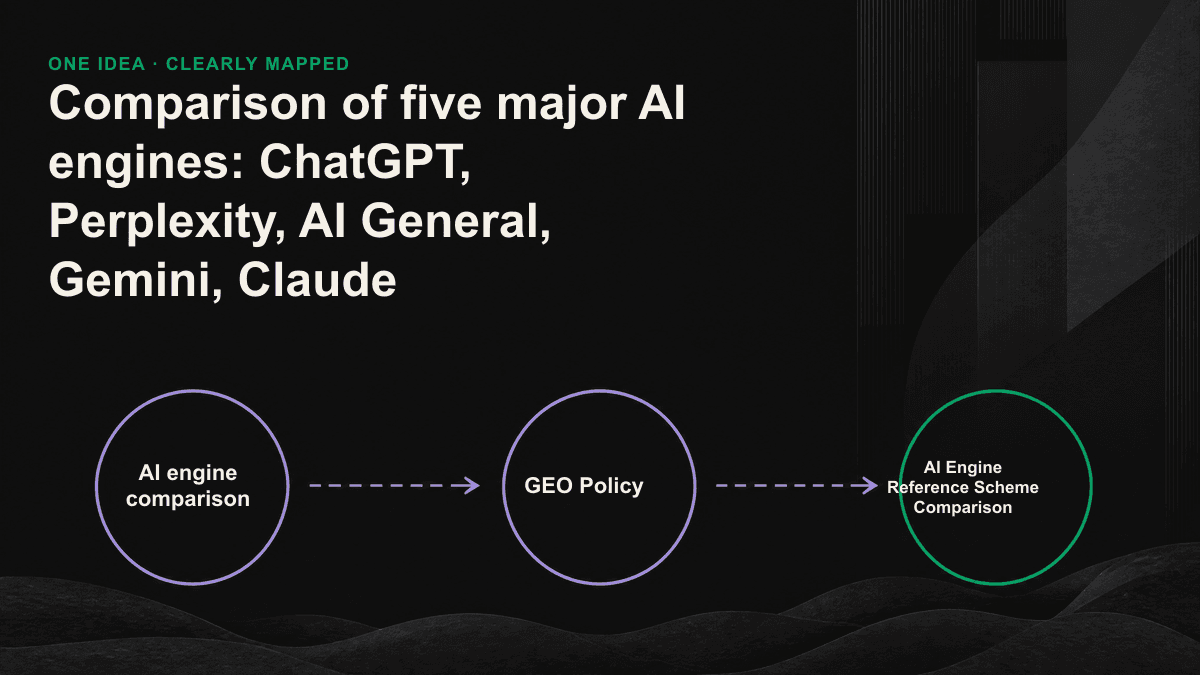
Reference factors for five engines, item by item
- Source index: ChatGPT Go Bing, AI and Gemini go Google, Perplexity and Claude each have their own grabs. The same article is not necessarily synchronized with the visibility of Bing and Google.
- Reference Transparency: Perplexity is almost sentence-by-word and is the easiest to observe results; AI overview shows only a few sources; ChatGPT depends on whether a search is opened; Claude quotes are small and precise.
- Fresh weight: Perplexity and ChatGPT search are time-sensitive and new content has the chance to be quickly drawn; AI has a general view of the created authoritative page and flips the disc more slowly.
- Structures and extractability: Five engines have a consistent preference to be clean and to answer the questions directly. It's the only thing that's done once and for all.
- Memory and brand volume: Impacts on memory-type responses and lack of search, which can't be achieved at a single speed by being referred to in power sources over a long period of time.
B2B SaaS, where should we place the resources?
Don't have to chase all five. With B2B SaaS in Taiwan, the priority of limited resources depends on where your buyer is doing the research and where you now have SEO.
- There is a stable Google natural ranking: Eat AI and Gemini first, at the lowest international cost, and replace the existing ranking page with a paragraph to extract.
- Buyer's bias in the direction of research, much comparison before decision-making: Prioritization of Perplexity, its high-intensity flow and quote-by-word to make the best of results.
- Clients are technical, engineering or developers: Don't miss Claude, it's more trusted than used in this group.
- Wants maximum exposure and is willing to invest in brand volume: ChatGPT has the largest user base, but at the same time takes good care of Bing's end visibility and the density mentioned in the long brand.
Instead of asking "how are they cited by AI," ask "what engine my buyer uses and what I look like now." The answer tends to point to two or three engines instead of five.— Tenten GEO consultant team
Next
Don't rush to change the content. The first thing to do is to figure out what the five engines say about your brand, about which of the competitions are quoting you. It's hard to systematize by asking one question, and we're keeping track of engine references and brands with Brand Radar, and then we're going back to the content gaps. You want to know the difference in your visibility on the five engines, you can book a 30-minute GEO diagnostic session, and we'll show you the situation.