Throwing the same question to Gemini and Claude, will your brand be quoted, and often the opposite. It's not about the quality of the content, it's about who can be quoted in both ways. It's different at the root: Gemini asks Google if he recognizes you as an entity, Claude asks if your official statement is clear enough, consistent enough to be worth it. It's only when you figure out which side you're supposed to fix, not spend your strength on a signal that doesn't work on another engine.
Two sets of citation logic, from the moment of indexing.
Gemini's answer is almost on Google's foundations. It can be fed into the content of the answer through grounding with Google Search, mostly with some weight in the Google Index, and with a physical node in the Knowledge Graph. In other words, Gemini didn't re-know you, but follow Google's established knowledge of you. Who you are in Google's state, largely determines who you are in Gemini's eyes.
Claude's going the other way. Its online search does not tie down Google's index, and it is more concerned that the source alone is not credible and that the content is self-proved. Claude was trained to be conservative, to be less attractive, more attractive, and not to put the inexplicable language on the table. It prefers to capture official documents, first-hand pages, rather than second-hand statements or manuscripts. This caution makes it particularly sensitive to "how you say yourself."
Gemini is looking at "Google, do you recognize this entity?"
To be cited by Gemini, you have to "be an entity" in Google's world. This means that your brand, product, and key people have clear nodes in their knowledge profiles, that official websites have structured data like Organization, Product, Wikipedia, business records, and news reports are consistent with each other. These signals accumulate to a certain degree, so Google will think of you as a trusted entity, and Gemini will dare put you in the answer instead of going around and quoting someone else.
Tenten helps clients in the GEO audit, and often sees the same gap: good writing, but thin entity signals. The company's name varies from page to page, the structured data is missing, and information on Google Business Profile and the knowledge panel is not matched. It's hard for Gemini to get all this information together. It believes in entities, so it would be preferable to quote Wikipedia, or a higher ranking, more structured competition. At this point, the problem is not the article, but the fact that you're an entity is not fully spelled out by Google.
Claude is looking at "Your official statement is not credible."
Claude's judgment on the entity is less than Google's knowledge of the crutches, more directly to your official content itself. It asks: "Does this make sense?" Is the same thing on your website? Does the page clearly identify the author, the date, the responsible organization? When an idea can be cleared of official pages, Claude quotes it as a clear increase; on the other hand, as long as it comes from vague sources or from a stand-in argument against each other, it slips over and replaces a viable source.
- First-hand official page: Product documents, pricing pages, white books, more than second-hand blogs Description
- Clear self-presentation: a word about who you are, what you do, what you're looking for, how you can be picked up.
- Before and after: Year of foundation, range of services, key numbers are not contradictory on the site
- Testable details: specific information that can be photographed, vague adjectives can't help.
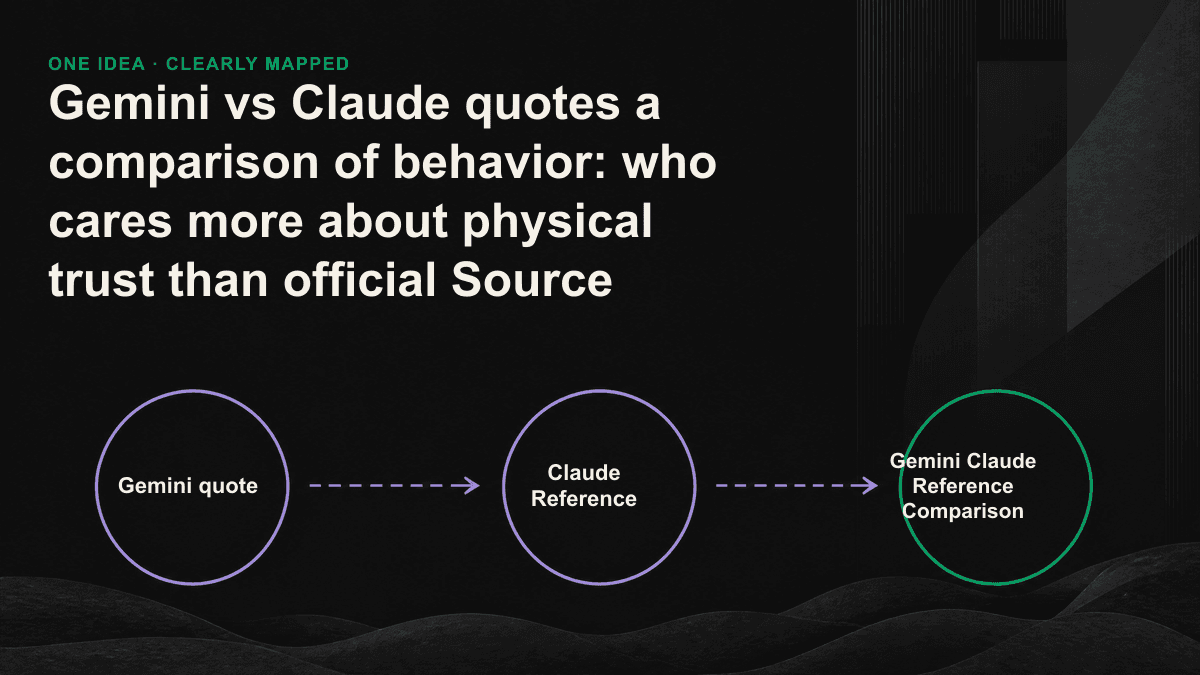
Why would the same brand act the opposite?
You're actually running, and you're going to have two distinct scenarios. It's a brand that's old, but unsophisticated: Google knew it long ago, had a hard knowledge node, Gemini was happy to quote it; but Claude couldn't catch a clean, low reference. The other is new: the official website is clear, the document is solid, Claude is willing to draw, but it is not a formable entity in Google's eyes, and Gemini often skips directly.
That explains why "only one set" makes you invisible on another engine. Put all the resources in Google, Claude, who can't afford to pay for it; write the official website content, but not build it in Google, and Gemini can't see you. The missing points of the two lines are different. They are divided in size and size and cannot be separated from the same list.
The practice of getting points on both sides.
- Complementing entity signals: The official website-based Organization/Product structured data, which brings together brand names, addresses, information to match Google knowledge.
- The official page is first hand: the key facts of setting prices, rules, and coverage of services require a clear and accessible official page, not just a blog.
- On-site facts are aligned: the same set of numbers and terms are consistent with all pages, avoiding Claude's loss of trust due to previous contradictions.
- Each paragraph is self-contained: both engines are better served by cutting the answer to a unit that can be extracted from the entire section with a clear small label and paragraph.
- Sub-engine tracking: The same questions are regularly checked in Gemini and Claude's respective quotes to see if the gap is on the physical or the credibility end.
First things first: figure out what's missing on both sides.
The problem with most brands is not that they have insufficient content, but rather that they don't know which engine they're in, which section they're stuck in. Is the entity signal too weak, or is it officially inconsistent? It's easy to make up the wrong side without even measuring it. The AI visibility monitoring sub-engine of Tenten tracks your actual references on platforms like Gemini, Claude and points the gap to a specific page. You want to know who you're being quoted and who you've been omitted from, you can schedule a 30-minute GEO diagnostic session, and we'll show you the data.