A GEO monitoring tool gives you a dashboard: how often the brand appears in ChatGPT, Perplexity, and Google AI Overviews, where it ranks, and how much visibility competitors receive. The dashboard does not tell you what to do next. It may show that the citation rate is 12%, but not why it is stuck at 12%, which three pages to improve, or whether those changes will move the result. That gap separates a tool from a consulting service.
The tools are for "visibility." You want "quoted."
The core function of most GEO tools is to track: enter a set of questions to see if your brand appears in the AI-generated answers, recording reference rates, emotional preferences, and source links. It's worth it because before that you didn't even know what you looked like in the AI answer. But tracking is a description, not a change. A tool can draw a downward curve, but it can't tell you. Behind you is the question of the content structure, is it the schema missing or is it your product page? There is no answer to the user's real question.
When we're doing the GEO audit for our clients, the most common situation is that clients have bought one or two sets of monitoring tools, one word on the dashboard, and the team looks at the numbers without knowing where to start. The tool quantified the "problem" and did not hand it over to you.
Blind Point One: Tools give you numbers, not cause and effect.
Why does the AI engine quote A brand instead of you? It may be A that breaks down definitions, comparisons, prices into clear paragraphs and can be extracted cleanly; it may be A that has structured data tags that make models more understandable; or it may be simply A that is mentioned by more third-party sources and accumulates physical weights. These three reasons respond to completely different actions. The tools only show "you're behind" and as to which of the highest-paid investments will have to be made, someone will have to read the answers, the source, the content of the competition, and then judge.
The tool tells you how much temperature is measured, but the reason for the fever, the prescription, the tracking effect is the doctor's job. So is GEO.— Tenten GEO consultant team
Blind point two: AI engines change every season, static tools don't follow strategy.
GEO’s hard spot is where the target moves. The trigger logic of Google AI Overviews, ChatGPT, the importance of searching sources, the preference of Perplexity for news and youth content are being adjusted every season. The tool will update its ability to "monitor," but it will not be decided whether or not to change your "response" strategy. Last year’s effective practices, such as the production of a large number of FAQ pages, may fail this year because the engine values the depth of content and the credibility of the source.
- Read the recent changes in engine behavior and translate it into the order of what you should adjust this season.
- Distinguishing what loss of visibility comes from algorithm changes and what your own content is degraded.
- Determines whether resources are invested in existing pages, new content, or third-party visibility.
- When you've only limited manpower, you'll be able to cut out the three things you've done this month.
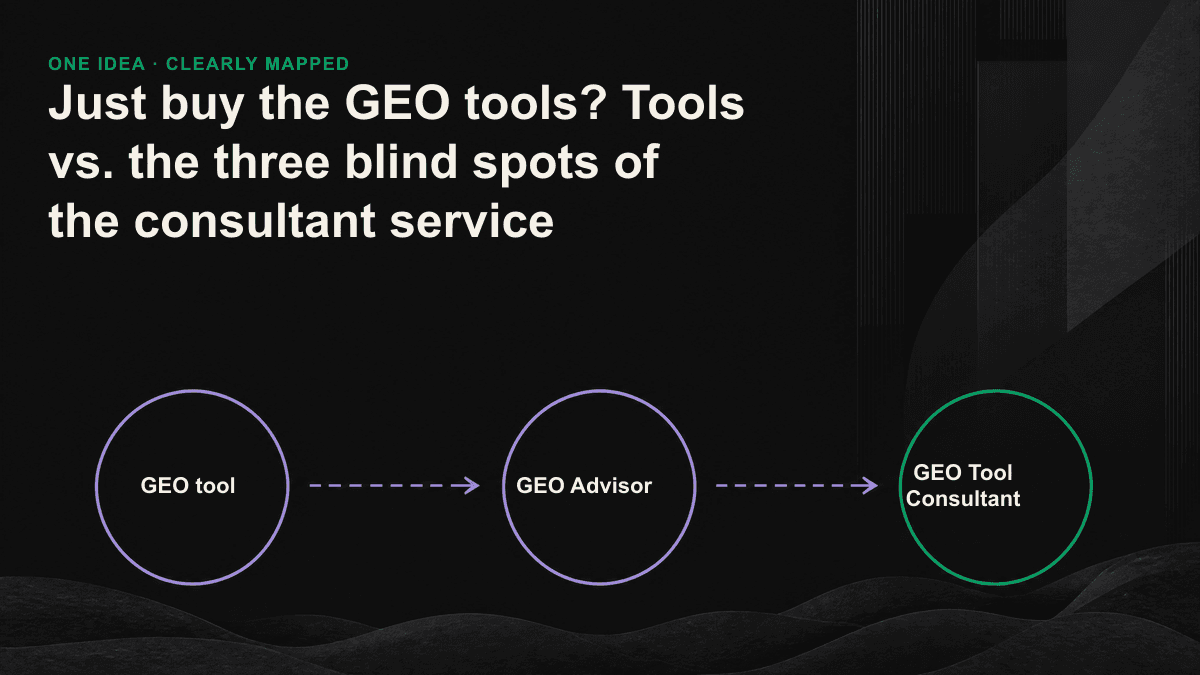
Blind point three: tools are not responsible for results.
This is the most easily ignored, but the most critical difference. You pay a monthly fee for the tool, for data access, not a promise of results. The tool will not come to you because you haven't made progress in three months, nor will it rewrite your content, add a schema, or get a third-party quote. The value of the consultant service is not "know more" but "someone is responsible for the direction of the curve": setting targets, running, copying, adjusting.
Tools are useful, and good consultants rely on them because monitoring data supports every judgment. Choose based on the gap you need to fill: data, or a person who can turn that data into action.
So, what exactly is the configuration?
If you already have someone in the team who knows GEO, who can read the monitoring data and translate it into content action, then buy tools, run on your own, it makes perfect sense and costs less. If you look at the red words on the dashboard, you're only anxious, you don't know what to start with, then what you're missing is not a third set of tools, but strategy and implementation. Buying an extra monitoring software will only make you more aware of the same problem.
The way to judge is really simple: open up the GEO tools you're using and ask yourself, "Do I understand what I want to do behind these numbers?" If the answer is no, the gap is there. You want to know which floor you're stuck in in the AI engine and which pages you're going to fix next?