In the same article, Perplexity listed it as a source, but ChatGPT did not mention it at all. This is not random, but the two engines use different standards to select sources. Perplexity searches and reorders the current web pages in real time for each answer, looking at which page best answers the question at that moment; ChatGPT mostly uses the knowledge memorized during training, and then adds a round of searches depending on the situation, looking at whether the brand has weight on the overall network. Only by understanding this difference will you know why your content is visible on one side but not on the other side.
Two engines, two sets of source selection logic
Perplexity is essentially a retrieval-first answer engine. You throw a question, it first splits the question into several sets of search queries, retrieves a batch of real-time web pages, uses its own re-ranking model to select several sources, and finally generates an answer with quotes. There is no "it remembers you" step in the whole process. Everything starts again from the current search results. Whether your page can be captured into the candidate pool and whether it can outperform other pages during reordering directly determines whether it will appear in the reference list.
The path for ChatGPT is different. When the search is not enabled, the answers come from the existing knowledge in the training corpus, relying on the impressions accumulated after your brand, opinions, and nouns are mentioned repeatedly throughout the Internet; after the search is enabled (through the Bing index), it will make up for a round of real-time searches, but it will still obviously prefer to cite authoritative sources that it already recognizes. The same issue is that ChatGPT weights brand familiarity much higher than Perplexity, which almost determines the treatment of new content.
What does Perplexity prefer?
From our experience tracking citation sources for clients, Perplexity's source lists have several stable tendencies. It almost always includes recently updated pages, and prefers paragraphs with a clear structure that directly correspond to the problem. It is not so obsessed with the historical weight of the domain.
- Freshness: Pages that have been updated in the past three to six months are obviously more likely to be selected than pages that have not been updated for many years, even if the latter has a higher domain authority.
- Structured answers: For pages with clear subheadings, columns, and question and answer paragraphs, the reordering model makes it easier to extract corresponding fragments for citation.
- Diversity of sources: The same answer is often deliberately mixed from different domains. The chance of a single large website dominating the list is low, and there is room for medium-sized professional websites to squeeze in.
- Directly hitting the query: The writing method that gives the conclusion at the beginning of the paragraph is easier to extract than the writing method that lays out the key points for a long time.
What does ChatGPT prefer?
The citation logic of ChatGPT pays more attention to whether a source is recognized enough. For the same theme, it tends to return to websites that are heavily linked to in the training corpus and cited repeatedly by peers. A new page that has been online for two weeks and no matter how precise the content is, it will be difficult to enter its default answers before it accumulates enough external mentions. But as long as your brand name is tied to a certain topic in enough places, even if it hasn't read that specific page, it may take the initiative to tell you about it; what it remembers is the brand, not necessarily a single page.
This creates a practical gap: Perplexity rewards the quality of a single page at the moment, while ChatGPT rewards the brand’s accumulated presence in the corpus. One runs again every day, and the other takes time to catch up. Your performance on both sides will be out of sync. Recognize this and you won’t evaluate your content with the wrong expectations.
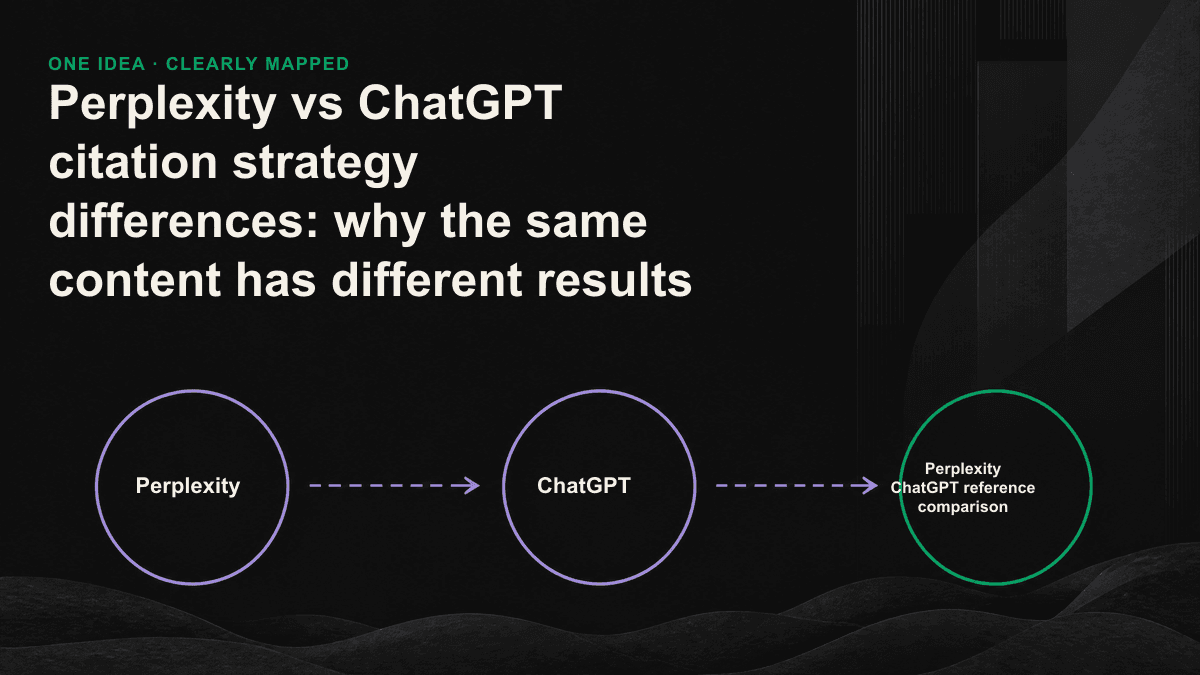
Why are the results different for the same content?
Let’s take a situation we often encounter. A B2B SaaS customer posted a product comparison article with solid content, clear subtitles, and a conclusion at the beginning. In the second week after it went live, Perplexity listed it as a source in relevant questions because it was new, well-structured, and answered the query directly. When I asked ChatGPT at the same time, the three old media outlets that were cited were not mentioning this article at all - this domain does not have enough weight in the corpus, and the new page has not had time to be certified by the outside world. The content has not become worse, but the two sets of standards are operating independently.
How can a piece of content be cited by both sides at the same time?
The goal is not to choose one or the other, but to make the same piece of content stand up under both sets of logic. The approach is split into two things: the page layer and the brand layer. If either side is missing, a certain engine will suffer. The page layer determines your immediate competition with Perplexity, and the brand layer determines your long-term credibility with ChatGPT.
- Give the answer at the beginning of the paragraph: the first sentence under each subheading directly answers the question of that subheading, so that the extraction models on both sides can be quoted cleanly.
- Maintain freshness: Regularly review the arrangement of important pages and add the latest data and update dates. Perplexity is particularly sensitive to this.
- Using structured formats: questions and answers, columns, and comparison tables can improve extractability and readability at the same time. Both sides suffer from this.
- Accumulated brand mentions: Through interviews, guest appearances, industry lists, and being cited by peers, your brand name can be tied to your topic in more domains. This is a long-term signal fed to ChatGPT.
- Produce original materials that can be cited: own surveys, actual measurement data, and clear definitions of terms, which are the trusted sources preferred by both parties.
How to track instead of relying on feelings
The most common mistake is to ask once in ChatGPT and jump to conclusions thinking it has not been mentioned. There is a lot of noise in a single query. If the same question is asked in another way or at another time, the results may be different. What you need is cross-engine, cross-issue, regularly repeated tracking to look at trends rather than single points. Tenten's AI visibility monitoring is designed for this purpose: it fixes a set of representative questions and monitors the citation rate of your and competing products every week across engines such as Perplexity and ChatGPT, allowing you to clearly distinguish whether the gap lies in content or brand authority.
First identify which side of the gap is, and then decide whether to invest resources in content or branding. This is much more effective than blindly producing articles. If you want to know where your citations differ between Perplexity and ChatGPT, you can book a 30-minute GEO diagnostic session. We will run a test with your actual query and identify what should be done next.