An AI shopping agent does not browse your product page; it parses it. When a buyer asks ChatGPT, Perplexity, or Gemini for project-management software with team collaboration that costs less than a thousand dollars per month, the agent reads the machine-readable data beneath the page rather than the polished hero and motion effects. If those fields are missing, outdated, or inconsistent with the visible page, even an excellent product can disappear from the shortlist.
How an AI Shopping Agent Reads a Product Page
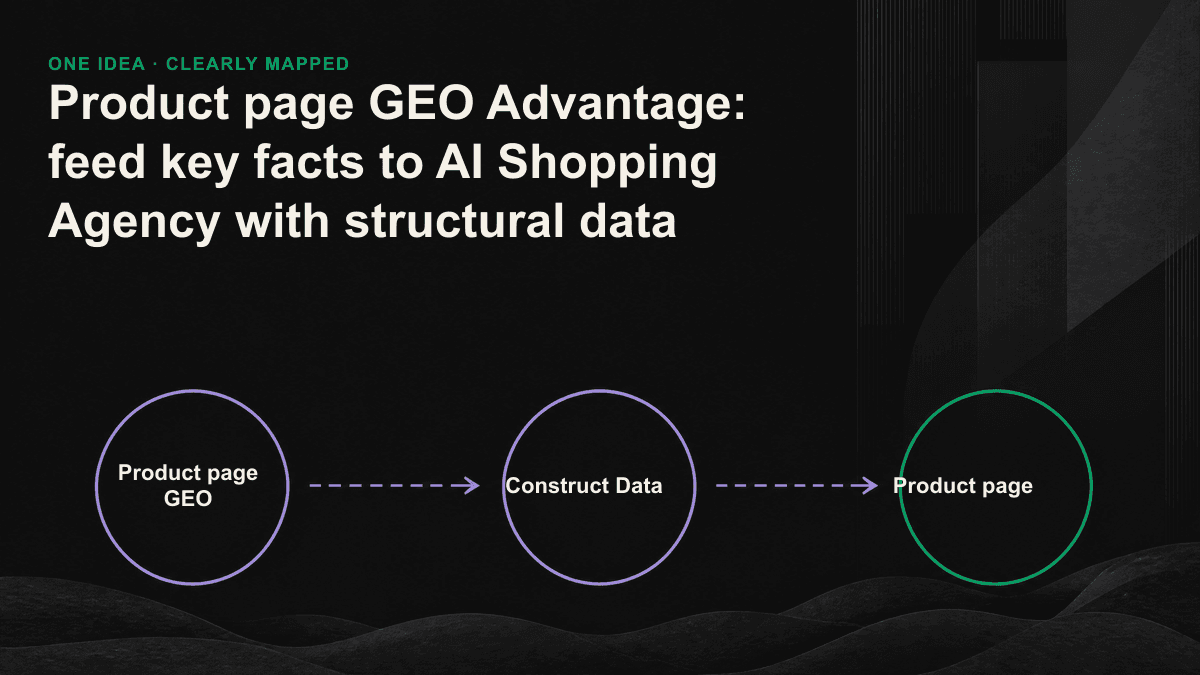
Traditional search engines crawl the page's text, headings, and links and then rank the result. A shopping agent instead extracts comparable fields from dozens of candidates in seconds: price, currency, availability, plan details, ratings, and refund policy. It must turn those fields into a concise recommendation. Pages with complete, unambiguous fields are easier to cite. Product-page GEO is therefore about packaging essential facts in a format the agent can take away at once, not simply making the page more attractive.
An agent usually has two extraction routes. It reads JSON-LD structured data first because that is the fastest and most reliable source, then falls back to visible text when fields are missing. Many B2B SaaS pages complete only half of the first route: they publish Product schema but omit Offer and rating data. The agent identifies the product but cannot compare price or reputation, so better-documented alternatives move ahead.
Which Schema Matters: Product Is Only the Starting Point
Adding Product markup does not complete the structured-data job. Product identifies the object; the nested properties allow a shopping agent to compare it. Each missing block removes evidence the model could use in a recommendation:
- Product: name, description, brand, and sku establish what the item is and who makes it.
- offers (Offer): price, priceCurrency, availability, and priceValidUntil support budget and inventory filtering; B2B subscriptions should also distinguish monthly from annual billing.
- aggregateRating and review: ratingValue and reviewCount provide the reputation evidence agents frequently mention in recommendations.
- FAQPage: answer real questions about integrations, free trials, limits, and compatibility in passages the agent can reuse directly.
- Organization and sameAs: connect the brand to its G2, Capterra, and industry-media profiles so the agent can verify that they describe the same entity.
offer and aggregateRating: The Two Fields Agents Need Most
If time allows only two repairs, start with offer and aggregateRating. Shopping prompts often contain both a budget and a trust condition: cheaper, highly rated, or proven by other users. The agent needs the offer price and aggregateRating evidence to answer. A price shown only inside an image excludes the product from a price-based comparison. Even a B2B SaaS page that uses custom quotes should publish a starting price or plan range so the agent has a comparable anchor.
Write Product Copy to Answer Questions
Structured data supplies fields; product copy supplies meaning. When a buyer asks whether the tool suits a remote team, the agent needs a sentence about that situation, not only a price. Make each paragraph self-contained: one clear benefit, one suitable buyer, or one specific use case. Put frequently asked specifications, limits, and compatibility details into short answers instead of hiding the point behind several screens of setup.
The Most Common Error: Structured Data and Visible Copy Disagree
In product-page GEO audits, the most common problem is not missing schema but a mismatch between schema and the visible page. The page shows a new monthly plan while JSON-LD keeps last year's price, or the page advertises a 90% limited-time price while structured data still contains the original amount. Because agents prefer structured data, they may recommend the product with the wrong figure. Hard-coding a 5.0 rating or inflating reviewCount creates an even more damaging trust signal. Structured data must be honest and synchronized; incomplete markup is safer than fabricated markup.
A Product-Page Checklist You Can Use Today
Turn the principles above into concrete checks. At minimum, every product page should pass these steps:
- Use a structured-data testing tool to confirm that Product, Offer, and aggregateRating parse without errors on every product page.
- Confirm that price and availability exactly match the visible page, and add a synchronized JSON-LD update to the price-change workflow.
- Turn the first three common product questions into FAQPage schema with answers short enough to be quoted as complete passages.
- Check that Organization sameAs connects the brand to trusted third-party profiles such as G2 and Capterra.
- Test three real buyer questions in major AI engines and record whether the product appears and whether its details are correct.
Product-page GEO is ongoing synchronized maintenance, not a one-time technical task. As more shopping journeys begin with AI instead of ten open tabs, the agent's ability to extract and quote the product accurately becomes visibility in a new channel. Book a 30-minute GEO diagnostic to see which fields are missing and which product facts AI currently states incorrectly.