Topic Cluster does not put articles close to each other together. It's a deliberate structure: to cover the whole of a major theme with a pillar page (Pillar Page), to answer the single question under the theme with a group of sub-pages, and then to tie them to a web with an internal link. The search engine and the AI engine see this net, and they judge you to be a credible source on this subject, rather than a traveller who has written a few stories on it.
What's the problem with the content cluster?
You used to write a blog, open a keyword, not connected to each other. As a result, the same subject was scattered in dozens of unrecognized articles, each with a little fur. The search engine is hard to judge which one of the most important topics is ahead of you, and your own page will be ranked with each other (keyword self-eating, keyword regulation). The content set turns this thing upside down: define a theme you want to have, and systematically break it down into a series of questions, each one of which points to the same core.
For example, if you want to have the theme of "Close of Telegraph", the main page is a long article that talks about the sale of telegraphs, and the subpages answer specific questions like "How is the e-mail opening rate normal"? Readers come in from any of the sub-pages and go back along their inner links to the support page and see the full picture of the subject. This structure allows each page to endorse each other.
Three parts of a content collection.
- Pilar Page: Broad first, covering the whole subject, usually locks the key to a competitive core, such as "content marketing".
- Subpage (Cluster Page): In depth first, the page answers only one specific question or long end keyword, and says that it makes it unnecessary to open separate tabs.
- Internal connection: every subpage goes back to the pillar page and the pillar page goes back to all subpages, forming a two-way linguistic network. This step is most often omitted, but it is the key to making the structure work.
Without one of the three, the jungle doesn't exist. Only the pillar pages do not have a sub-page, which is equivalent to an island long paper; only a bunch of sub-pages do not have a pillar page, which is equivalent to returning to the old scattered pattern; there are pages without internal links, and the search engine and AI can only look separately at single pages without reading the theme structure that you have deliberately created.
Why is AI engine special for content collection?
The Generating Engine (ChatGPT, Perplexity, Google AI Overviews) does not answer the question by looking for the strongest article, but by aggregating credible clips across the entire website and even the Internet to synthesize the answers. When your web site has a whole set of structured and responsive pages under a theme, it is easier for models to extract content from you over and over again and to identify you as a source of authority for the theme. A single red article can bring in a flow of traffic, and an entire set of mutually authenticated jungles will allow AI to quote you repeatedly.
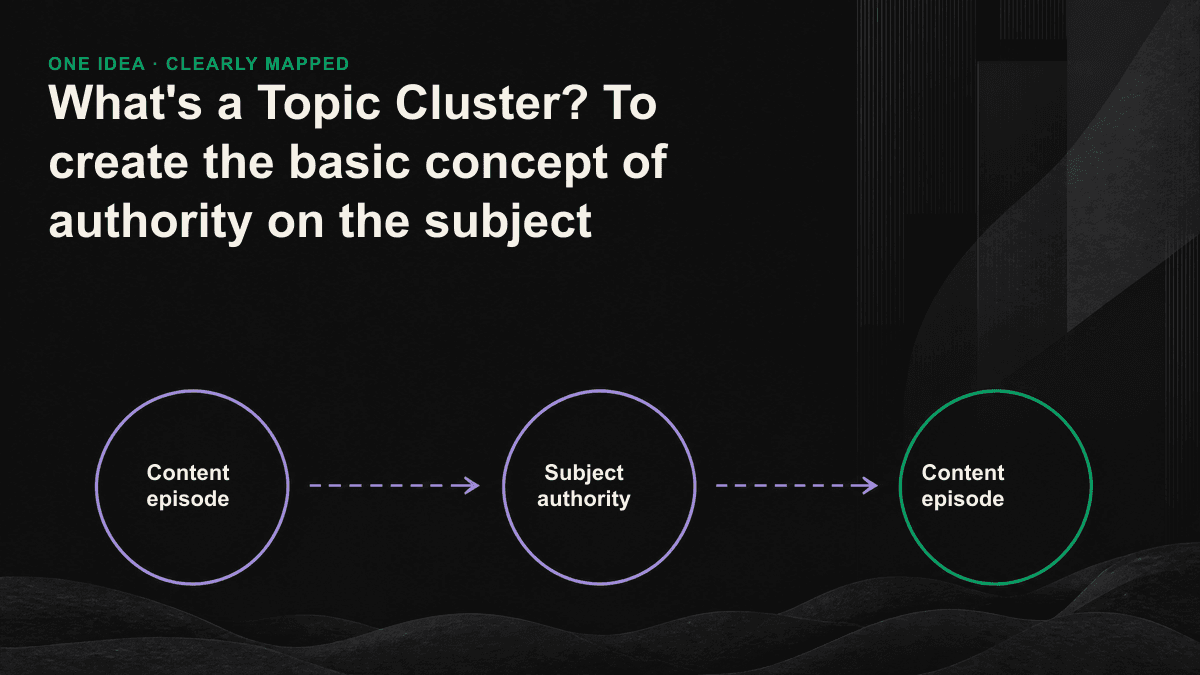
It's also where GEO began to divide with tradition. SEO, on the page line, GEO, on the frequency and consistency of your subject, is concerned. The content series serves both people at the same time: it raises the relevance of the subject to the search engine, and it provides clean, extractable, mutually supportive paragraphs to the AI engine.
Steps to create a content collection from zero
- Pick a theme that you really want to win, that's big enough to tear out more than 10 issues, and that's focused enough not to lose focus.
- With real search questions and AI dialog questions, each long question is a page.
- First, write the pillar page, give a full picture of the theme and leave the location of the pages linked.
- Each page produces a subpage, each of which is self-contained, answers the question directly, and the paragraph structure allows AI to extract it clean.
- Completing a two-way internal link and branding the theme with consistent anchor text.
Order is important. Many of the teams started writing crazy pages, and it was only in the eighth section that they discovered that there were no pillars, and the theme was like sand. The structure is stable with the first pillar and the first child page.
Three of the most common mistakes in building a jungle.
First, write the subpages into overlapping content, both of which speak of the same long question and become self-eating. Second, the internal link is one-way, the sub-page is back to the support page, and only half of the Internet is available. Thirdly, the theme is too big or too small - too big (e.g. "selling") can never be finished or won, too small (e.g. "Tuesday afternoon televised reception rate") to break enough.
The value of content collections is not in the number of articles, but whether they can be read as a whole that is mutually authentic.
Make sure you have the missing piece.
Most B2B sites have plenty of content but little structure: one oversized page with no supporting pages, or many isolated pages with no clear relationship. To see whether your core topic needs deeper coverage or stronger internal links, set aside 30 minutes for a GEO diagnostic session using your existing pages. Tenten's GEO content engine turns scattered articles into a connected topic network that AI can retrieve and cite repeatedly.