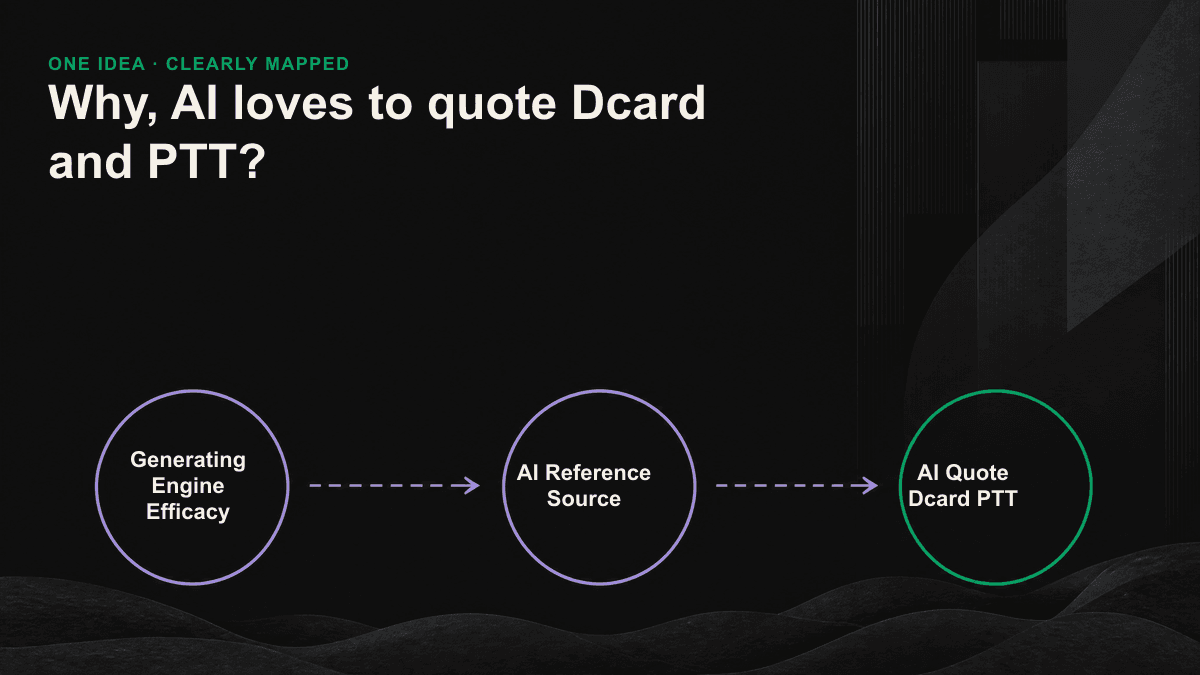
Ask ChatGPT or Perplexity a distinctly Taiwan-focused question, such as whether a SaaS tool is worth subscribing to or which local service works best. The answer may rely on a Dcard thread or PTT replies instead of a brand site. The engine has not made a mistake. It judges credibility differently from a marketing team, and those forums happen to provide the kind of material it can reuse as the backbone of an answer.
The Five Signals AI Uses to Choose Sources
Before generating an answer, an AI system selects a small group of sources from model knowledge and live retrieval, then synthesizes their claims. Its choices depend less on traditional SEO metrics such as link count or domain authority than on signals that make a passage look credible and usable. Understanding those signals is more valuable than memorizing another theory about the algorithm.
- Public and easy to extract: The content is accessible without a hard login wall, with clear headings and paragraphs that let a model isolate a citable passage.
- Current: Threads receive new replies and carry clear timestamps. Engines favor recent, changing information over a static page that has not moved in three years.
- Firsthand language: Phrases such as "I tested it" or "I ran into this problem after six months" signal personal experience rather than packaged marketing.
- Independent corroboration: When dozens of unrelated posts reach similar conclusions, a model can treat the pattern as tested consensus.
- Dense native-language material: High-quality Traditional Chinese source material is relatively scarce, while Dcard and PTT contain it at scale.
Together, the five signals create an uncomfortable result for marketers: a carefully produced product page can lose to a three-line PTT comment. The page is not necessarily poor. It tells readers what the brand wants them to believe, while the engine is looking for what other people actually experienced.
Why Dcard and PTT Keep Appearing
Both forums combine volume, timestamps, and recognizably human language. PTT contains more than two decades of discussion, and some boards serve as an authority within their field. Dcard adds current sentiment from younger audiences and consumer decisions. For a model trying to answer what people in Taiwan actually think, the signal density is difficult to ignore.
Their structure matters just as much. A thread has a title, a main post, reactions, and replies; it already resembles a question-and-answer format, so extraction is inexpensive. Many brand sites hide their most citable specifications and prices inside carousels, expandable elements, or large images. If an engine cannot read that information, it behaves as though the information does not exist.
Wikipedia, Government Sites, and Local News Provide a Different Kind of Trust
Forums provide experiential trust. Chinese Wikipedia, .gov.tw domains, and local news provide factual trust. For questions about a company's founding year, market size, or a legal definition, engines prefer these sources because they are structured, widely referenced, and harder to fabricate. A strong AI answer usually combines forum experience with authoritative facts; without either side, the result becomes thin.
What This Means for B2B and SaaS Brands
Potential customers are already asking AI whether Product X is good and how it differs from Product Y. Most of the evidence behind that answer is outside your control. Even flawless official-site SEO cannot compensate when Dcard, PTT, Wikipedia, and industry news never mention the brand. The user sees a conclusion that excludes you, then carries it into comparison and purchasing decisions.
Consider a Taiwan HR SaaS provider with a complete official site, newsletter, and technical blog. When AI is asked to recommend a leave-management system in Taiwan, the company never appears because no relevant Dcard or PTT discussion mentions it. A competitor enters the answer through a five-year-old thread while this brand never reaches the shortlist. Traditional ranking tools cannot reveal that gap.
How to Earn a Place in These Sources
There is no shortcut. Build genuine evidence in the places where buyers already look instead of trying to inflate mentions. Coordinated posts with repetitive language, clustered timing, and little substance are easy to discount as low-quality material and can damage trust in the brand.
- On your own domain, replace adjective-heavy marketing with firsthand tests and cases that include specific numbers. Give engines the kind of experience-based evidence they can trust.
- Organize objective brand facts so Wikipedia and industry media can cite them: a clear founding date, product definition, and verifiable milestones.
- Encourage real users to share their experience in communities they already use. Earn discussion through a worthwhile product experience, not a posting budget.
- Monitor the sources AI cites for your category and whether the brand appears. Without measurement, every optimization remains a guess.
Move from Guesswork to Evidence
AI visibility can be measured: which sources appear, how often the brand enters Taiwan-focused answers, and how the model describes it. Comparing Dcard, PTT, Wikipedia, and local news reveals where content and PR effort should go. Use Tenten's AI visibility monitoring for ongoing tracking, or book a 30-minute GEO diagnostic session to put the immediate gaps on the table.