Your visibility in the AI answer depends on what you ask, not what kind of monitoring tool you use. The same brand, changing the prompts to ChatGPT, could go from "not mentioned at all" to "first recommended". So the first step in tracking AI's reference is not to buy a dashboard, but to standardize what questions to ask.
When most brands do this, they throw out only three or five intuitive questions and run one time and think it's working. The problem is that the answer of the AI engine will drift from the point of view. "Recommended GEO Agent" and "GEO Consultant for SaaS in Taipei" are often only half the brand list. If you're only looking at the half that you can easily be mentioned, you're getting a glorified visibility, and it's even more dangerous to take a decision.
First, we'll use the prompt as a ruler.
To make the numbers that come out of a week comparable to each other, the prompts have to be as fixed as a ruler. When we set up a tracking program for our clients, we write down three things about each set of prompts: language (speech and English), questioning (e.g., "I'm the sales director of a B2B SaaS") and whether to allow AI to search online. One of these three variables will jump, and you can't tell whether it's real progress in visibility or simply a good answer.
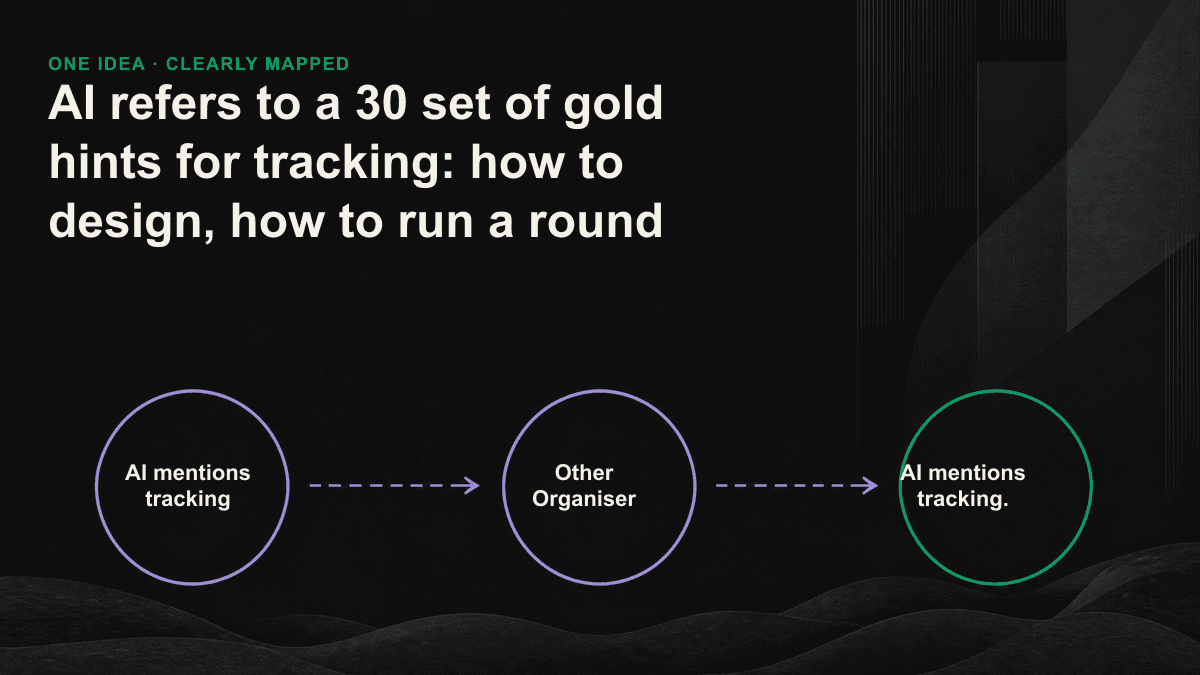
30 of the five main groups of gold tips.
Split the 30s into five groups, six of each, covering users who never knew you, and were ready to choose your full path. If you're missing anything, you're missing a piece of the visible map.
- Discovery type: Users describe demand without naming any brand. The test is you're not going to be on the table by AI's lead.
- Direct brand: Ask your company directly. The test is that AI gave you the correct description.
- Comparison: Put you and the competition together. It's the volume of the conversation.
- Purchase Intense: Bringing in a situational and identity problem. The test is that the high value of the transaction is close.
- Trust: Ask the case, effectiveness, evaluation and criteria for judgement. It's an AI eyed honour signal.
Every kind of fieldwork.
Here are each of the selected topics. When it's actually used, replace "Tenten GEO" with your brand, and "B2B SaaS" with your industry, you can run. The square brackets are the variables you have to replace.
- The category found: "Recommends several GEO/AEO agents in Taiwan who specialize in [B2B SaaS] and provide reasons for their selection."
- The category found: "I want to raise the visibility of brands in ChatGPT and Perplexity, what kind of service providers?"
- Direct brand: "What is this company's core service?"
- Direct brand: [Tenten GEO] Which customer? What are the practices?"
- Comparator: "Where is the difference between [Tenten GEO] and other SEO agents in Taipei?"
- Buying intent: "I'm the sales manager of a Taipei family, wondering if the company was mentioned in the AI search and what the first step should be?"
- The purchase plan: "The AI that started tracking brands with limited budget new ideas mentioned, what are the practices?"
- Trust: "What GEO agents have practical examples or measurable results?"
- Trust type: "When selecting GEO consultants, should we see which indicators they really understand?"
Monitor the rhythm: how often do you run, what numbers?
Core 30 recommends that regular questions run once a week, repeat each group at least three times and take the most results, to offset the randomness of AI's answers. That's how we locked the question in Brand Radar, ran a round every week and saved us time to repeat the reminder manually. Four numbers per round.
- Citation rate: 30, several groups mentioned you. This is the most direct visible denominator.
- Describe the correct rate: When it comes to you, the service and positioning is almost right, and does it take old information as it is?
- Voice: You and the competition have been raised on the same subject several times to see what you're talking about.
- Quoted source: AI, to answer this question, which web pages were cited, is the clue to which content to add.
Turn the reference log into content action.
The numbers themselves will not improve visibility until the next move. You're hardly mentioned in a prompt, usually directly against a content gap. The comparison is all over the military, most of it because you don't have a comparative page on the competition, and AI can't find a reference to structure; trust is zero, and often the case and the results are not an AI-readable page. Turning the weakest of the week into two or three pieces to be added next month, the numbers will start to move.
It's not "AI knows me or not," it's "Ai will not mention me when the user does not name me."— Tenten GEO consultant team
This set of 30 prompts is the starting point. The real job is to get out of the gap and get the content, the structured data and the comparative pages together before the numbers come back. If you want to see your visibility at a few key points, you can book a 30-minute GEO diagnostic session, and we'll run a test with your brand and point out a gap.