You can't hang UTM on the ChatGPT quote link. The model will reconnect the original URL of your page and throw away all the utm sources, utm mediam you so carefully added. So if you wait in GA4 for a nice row of "chatgpt / referral / utm campaign", you'll only get the wrong conclusion: AI didn't bring guests. In fact, it's sending half the buyers of the evaluation to your price sheet in a quiet way, but it's not signed in the field you set. To catch the group, two layers of the web: referrer type to catch the source, and server journals to catch the rest.
GA4 default, why lose AI traffic?
The problem is that water leaks in three places at the same time. First, there is no "AI" barrel in the GA4 default pipeline, and the clicks brought by Chatgpt.com will be thrown into Referral, mixed with your partner, the e-mail. Second, ChatGPT's desktop App, iOS App and some connection processing removes the header, and these points become direct from those who enter the URL directly. Third, Google AI Overviews is mostly counted as Google/organic. The same high-intensity people were scattered in three barrels of Referral, Direct, Organic, and none of the default forms would tell you that they were actually from AI.
Layer one: Identify AI clicks through the referrer
Deal with the half of the source. Do not move the default pipe group in GA4 to modify a custom pipe group and add an "AI Assistant" pipe, with the condition that the working session is based on the regular chatgpt|openai|perplexity|gemini|copilot|claude. So all the AI clicks that come out of the source are placed in the same column, and you can see them directly on the web page, stop and switch events. Here are the names of the hosts that are currently worth putting in the list:
- ChatGPT:chatgpt.com,chat.openai.com
- Perplexity: perplexity.ai
- Google Gemini: gemini.google.com
- Microsoft Copilot: copilot.microsoft.com
- Claude: Claude.ai
- Exceptions: Google AI Overviews almost all clicks are mixed in Google/organic, uncleaned with referrer, and this one is extrapolated to the side of the exposure of Search Console, so don't push back.
UTM can help, and can't.
Clear the UTM border, you don't waste your energy. You can't control how models can recreate the URL, so any attempt to "trace parameters on the AI quote" is dead. The UTM is really useful, and it's a link you've spread out: a post on LinkedIn, a guest article on your contribution, a book and a directory, an electronic report. These are the materials that AI will read into, and the connections that people can get, and they're good enough to get back. There's another side effect that's often overlooked: good UTM discipline, clean your direct buckets, and the remaining suspicious traffic that doesn't referrer and falls into Direct is easier for you to recognize, which is an AI click that was taken from the source.
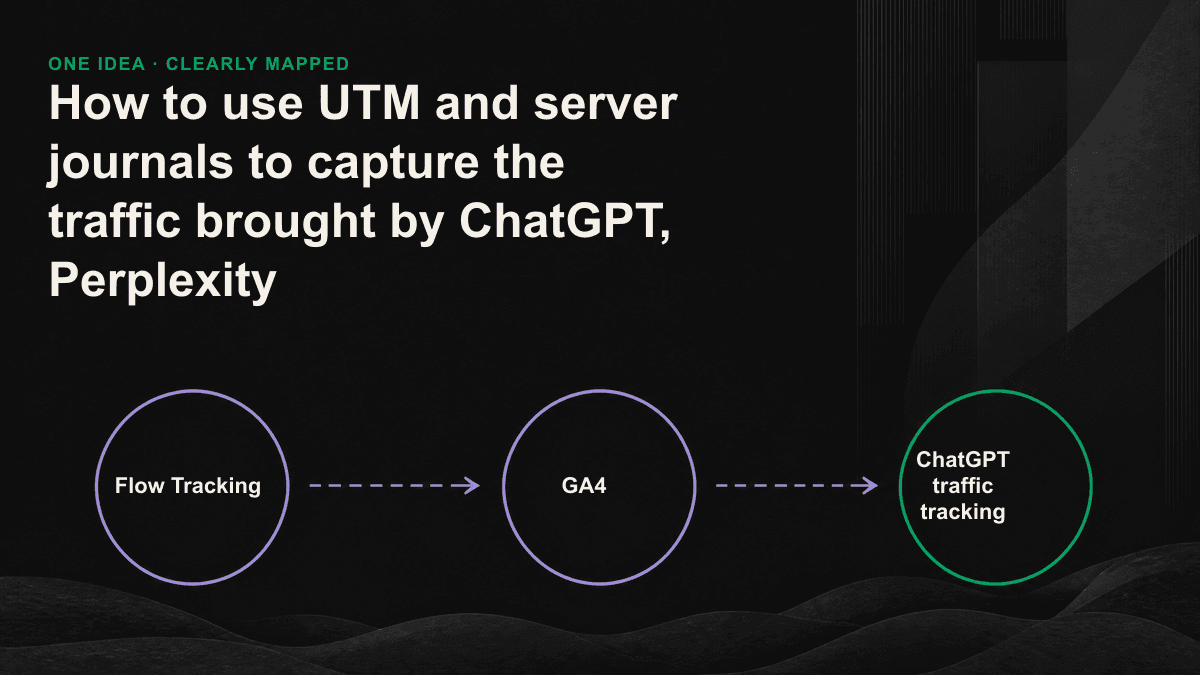
Second floor: The server journal is the whole truth.
GA4 missed, the journal will be restored. The server journal caught two things GA4 could not see. One was a human hit that was stripped of its source and blocked the analytical code, so as long as the header remained, the journal would remain. The second is the capture of AI itself, and here there are two more types: the indexed crawlers that build the language library, and the other is the instant type that people are asking questions, the model is taking your page immediately. The last one is most valuable, the moment of its life, which means that your content is being read to answer a true question.
- Indexed crawlers (in the building of language banks): GPTBot, PerplexityBot, ClaudeBot, Bingbot.
- Instant extraction type (some are asking you): ChatGPT-User, OAI-SearchBot, Perplexity-User, Claude-User.
The trick is direct. Grab humans, click with grep-E 'chatgpt\.com|perlexity\.ai|gemini\.google' access.log; grab AI, grab with grep-E 'ChatGPT-User|Perplexity-User|OAI-SearchBot|GPTBot|ClaudeBot' access.log. If you take an instant-take-type hit, you'll see which pages of AI over and over again to answer questions about the URL and time it grabs. Those pages are the ones that you should strengthen, put on the CTA, make up the structure, because they're answering for you, and you just haven't connected the switch.
Connect two floors: 30 minutes a week to track the rhythm.
The tools are ready, the rest is fixed. The tracking of AI traffic does not require an expensive dashboard, but three actions that can continue to run less than half an hour a week.
- Monday: La GA4 's "AI Assistant" custom conduit, which looks at the number of sessions last week, the arrival of web pages and the conversion events, notes the apparently growing or falling pages.
- Wednesday: grep's instant pickup from last week's journal is user-agent, listing the top five most captured URLs.
- Monthly: Take the pages most read by AI and decide which pages to rewrite and strengthen in the next round, as they are quoted in your question.
AI brings traffic in small quantities and with a strong intention. You don't want a nice long map, but you know which pages are answering your questions and who are sending in.— Tenten GEO
From "Is there a flow?" To "Is there a reference?"
Referrer data and logs reveal what happened after a click, but they are downstream signals. The upstream question is whether AI mentioned or cited you when the user asked. A click is only the visible trace of a citation; zero-click exposure can still endorse the brand. Brand Radar connects the full funnel from being read and cited to receiving a click and entering pipeline. To find where your funnel breaks, book a 30-minute GEO diagnostic session and we will test your actual questions, show the gaps, and rank what to fix first.