To be cited by Gemini, accept the fact that its answers are almost always on the immediate Google search results. This means that your ranking in Google, and whether your content can be sorted out cleanly, is directly determined whether Gemini will include you in the source. The grounding is not a science, but a search line that can be broken or reversed.
This determination is important because most of the "GEO skills" on the market consider all AI engines the same. ChatGPT goes Bing, Perplexity has its own index, while Gemini shares Google with Google's AI overview, AI mode. Most of what you did for Gemini was to fix the Google search and fix the structures that the machine can easily extract.
Grounding is a wire, not a memory. Answer
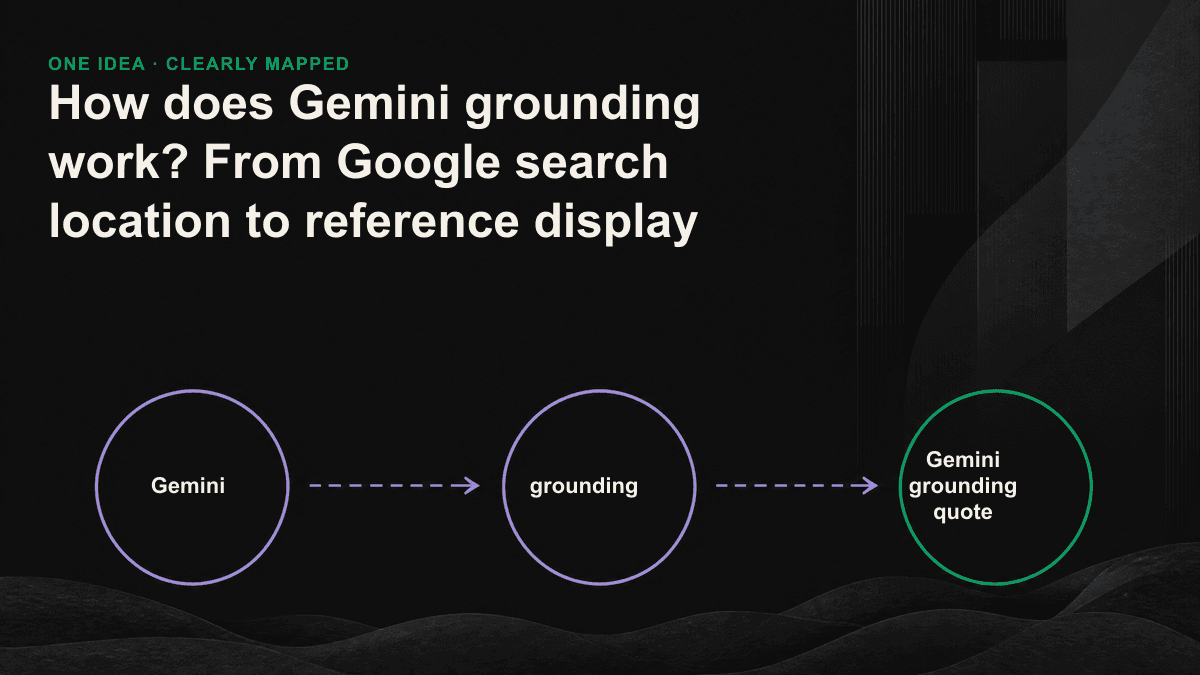
When grounding is open, Gemini will not be able to remember the intellectual answer directly from the training. It will first determine whether it needs external information and, if necessary, generate a search query of its own, throw it in Google, and read back-to-back web content into the context, and then use this organizational answer. The whole process took place within seconds after the user sent the problem.
- Adjudication: The model assesses whether this query requires immediate or factual information, does not need to be answered directly and does not waste a search.
- Generate queries: The models break questions into one or more search queries, usually more complete and more specific than the user typed.
- Check: These queries are sent to Google to retrieve the results of the previous paragraph.
- Synthesis: The model writes in the context the text of the paragraph that was retrieved, and records which sentence corresponds to which source.
- Grounding metadata: alongside the answer, the API returns source details that an application can display.
Quoting how to be formed: reading metadata
The quotes are not added to the model, but are based on this structure. If you use Gemini API to drive the grounding, there will be more columns in the response, each responding to the visible loop.
- WebSearchQueries: a search query that the model actually ran, which is a reverse gold mine, tells you what Gemini thinks should be answered.
- Grounding Chunks: A list of cited sources, each with a title and a URL, which is usually a re-direction of Google proxy rather than the original URL of your website.
- groundingSupports: Matching each sentence of the answer to the source, identifying which chunk to support it, and some versions with confidence points.
- ResearchEntryPoint: A pre-stated "Google Search Proposal" that Google uses requires the developer to display it as it is.
There's a very neglected detail here: grounding Chunks gives a re-directional connection, not your domain. In other words, you were quoted in Gemini as "a document from Google's search book" instead of a brand name that was remembered. If you want to be quoted, you have to be able to stand in the Google search.
Query fan-out: The ranking has been redefined.
The easiest thing to misjudge is that Gemini rarely search only once. Faced with a slightly complicated problem, it's the same logic behind the Google AI model by tearing it apart into separate inquiries. The consequences are real: you might have been number one in the original query, but you wouldn't have been in Gemini's deciphered sub-survey. And it's not possible to get elected; it's also possible to be quoted in a question about longtails, in a lead query that you don't have. The ranking is still important, except that the answer to the question is much different.
Motivated Rip: When will Gemini not search?
Not every question triggers a search. Earlier, Gemini used a system called dynamic retrievation to calculate a score for questioning, assessing whether it would be better off with external information than by setting the door to search; a direct answer, like writing a poem for me. The new version uses the internal development model itself, with the developer missing a spin button, and the logic is the same: facts, time-efficientness, and local problems. For people who do content, this draws a line: product comparison, price, law, time effect, or local information, with a high probability of being triggered by grounding, and worth investing; common sense or creative generation, and how to improve it, Gemini will not necessarily search.
To be cited by Gemini, there are four things to do.
Turns the scheme above into an actionable one, roughly four. They add one to the other, one less, and it's broken in one ring.
- Line up in Google search: This is a foundation that can't skip. Gemini's sources are mostly from the earlier results of the fan-out sub-survey, and traditional SEO technology and content are to be done.
- So that the paragraph can be extracted alone: a small label with a self-contained answer, put the conclusions ahead, and not spread key information after three segments. GroundingSupports are meant to respond to the source of the sentence.
- Building entity trust: let Google know exactly who you are. Consistent brand names, authors, corporate information, together with structured data and external references that can be validated, will increase your chances of being considered a reliable source.
- Overwrite Query instead of focusing on the main theme: Breaking a theme into sub-questions that the user will really ask, giving a clear answer to the search for the fan-out.
When we tracked Gemini citations for B2B software clients, the most common gap was not weak content. The pages ranked in Google, but they did not contain one clean passage that Gemini could extract as an answer.— Tenten GEO content team
Gemini’s citation logic is actually good for the real people: it searchs the local base for an explanatory, reversible Google, rather than a transparent model preference. You can find out which queries it ran, who it attracted, and which line it responded to, and you can add yourself to the source list. If you want to know if your content has been quoted on Gemini and other engines, and what's missing, you can schedule a 30-minute GEO diagnostic session, and we'll use AI visibility monitoring to show you real visibility numbers, and then figure out the first hole.