A company that makes CNC lathes or automated loading equipment should worry less about a keyword falling to page 2 and more about being absent when an overseas procurement engineer asks ChatGPT which Taiwan suppliers offer five-axis machining for titanium. Machine tools have high prices and long decision cycles, so buyers often reduce the candidate list to three companies before sending an inquiry. Once the factory is missing from that list, sales cannot recover the opportunity later.
Why Machine-Tool Companies Are Disadvantaged in AI Search
The reason is concrete. Product information is usually locked in a 20- or 30-page PDF catalog, quotation sheet, or internal specification form. The public site offers one generic product page, a few machine photos, and a claim of precision and reliability, while every useful detail stays in the download area. A generative engine cannot reliably retrieve travel, spindle speed, positioning accuracy, or machinable materials from that structure, so it has no evidence for including the company in an answer.
There is also a language gap between specifications and applications. Buyers ask about thin-wall aluminum production or medical-implant machining, while the website states only an X-axis travel of 1200 mm. Without content that translates a machine specification into a use case, AI cannot connect the product with the need. The engine is not deliberately ignoring the company; it does not understand what the machine is suitable for.
Why AI Cannot Use the Typical Machine-Tool Catalog
Our reviews of several equipment-company sites found the same problems repeatedly.
- Key specifications appear only in PDFs or images, with no extractable text on the HTML page.
- Every model in a series shares one page, leaving AI unable to distinguish the 500 model from the 800 model.
- No passage answers what the machine is designed to process, how accurate it is, or how it differs from alternatives.
- The English version is machine-translated or missing, making the site difficult for both overseas buyers and AI to interpret.
- Product and FAQ schema are absent, forcing the engine to infer the page structure.
How Tenten's Manufacturing Program Works
The program is designed for machine tools, automation equipment, and component OEM companies with export-focused, long decision cycles. It does not require rewriting the entire site. We reorganize existing specifications and cases into material an AI engine can extract and match with purchasing questions. The company already owns the expertise; it is simply stored in formats AI cannot read.
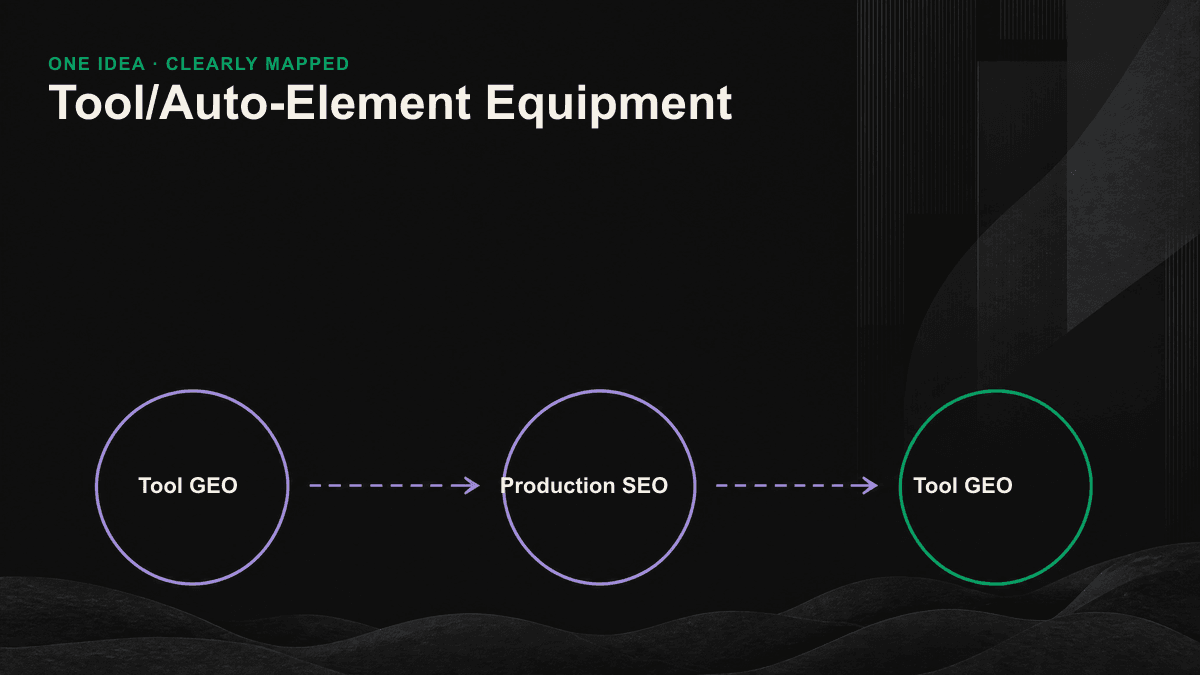
Phase 1: GEO Audit (30 days)
We first use AI visibility monitoring to scan the brand and its main models across ChatGPT, Perplexity, and Google AI Overviews. The audit identifies which application questions produce the company and which produce only competitors. It also finds specifications locked in PDFs, missing structured data, and weak English pages. At the end of this 30-day review, the team receives a prioritized gap list rather than generic advice.
Phase 2: Content Engine
For each main model, we create a page that combines specifications, applications, and selection guidance. PDF parameters move into HTML, the page explains what the machine is and is not suitable for, and Product and FAQ schema clarify the structure. A natural English version serves overseas buyers and AI at the same time. New application pages then expand the set of questions for which the brand can be cited.
Run These Checks Before Starting
- Give ChatGPT the name of the primary model and ask which applications it suits.
- Ask Perplexity for Taiwan machine-tool suppliers serving a specific application and check whether the company appears.
- Inspect product pages to see whether key specifications are selectable text or exist only in images.
- Ask a colleague whether the English page reads like a person wrote it or like an unedited machine translation.
What Changes After Implementation
Results will not appear in the first week, but the direction is visible. Once AI matches a model with the right application questions, overseas inquiries may begin to mention ChatGPT or Perplexity as the source. Sales may also receive better-qualified questions with specifications closer to a real fit because AI completed an initial screening. For a high-value product with a long decision cycle, that preselection matters far more than a few extra generic visits.
If you do not know how AI currently interprets the main model, start with an audit. Our 30-minute GEO diagnostic session demonstrates its actual visibility in ChatGPT and Perplexity and identifies the two or three gaps that matter most. Use that evidence to decide whether a larger program is warranted.