AI systems cite Mobile01 because its threads are easy to extract, not because an account is old or prolific. When Perplexity, ChatGPT Search, and Google AI Overviews answer purchasing and troubleshooting questions from Taiwan users, they favor posts that state the model, price, months of use, and measured results clearly. The practical goal on Mobile01 is not a polished experience piece. Answer one real question in a structure the engine can lift into a response without losing the meaning.
Why AI Systems Often Cite Mobile01
Three factors reinforce one another. First, the forum ranks prominently in Google for Taiwan consumer queries, so its threads often enter the retrieval set for popular products. Second, a thread is already a question-and-answer structure: one initial problem followed by firsthand reports from several users, which supports cross-checking. Third, the posts include time and context, such as a report after three months or 20,000 kilometers. That evidence carries more weight than promotional language on an official site.
This also explains why copying an official product page into a Mobile01 post rarely earns a citation. Engines want user language and concrete evidence, not another brand statement. Understand that distinction before choosing a topic or drafting the opening post.
Topic Selection: Find the Gaps in Today's AI Answers
Do not choose a topic by instinct. Ask Perplexity or ChatGPT about a target keyword in Traditional Chinese and a Taiwan context, then inspect the sources, weak points, and whether Mobile01 appears. A vague answer, a citation to material from three or five years ago, or a complete lack of Taiwan data is a useful opening. Fill a question the engine cannot answer well today instead of competing with a thread that already covers it thoroughly.
- The question names a model, specification, or use case, such as how a particular device performs in Taiwan's humid climate.
- Existing threads are outdated or contain only one or two replies without a clear conclusion.
- Your product or service has genuine firsthand data that can answer the question.
- The topic has steady search demand rather than a one-time news spike.
- The discussion complies with the board rules and offers more than a sales pitch.
Publishing: The title and opening post determine whether AI can extract the answer
Write a precise title using the model, problem, and situation instead of a vague clickbait headline. Engines often use the title as both a classification signal and a summary anchor. The original post matters even more: state a self-contained conclusion within the first thirty characters, then add the background and details. If the conclusion is buried in the fifth paragraph, an engine that reads only the beginning will extract setup instead of an answer.
The opening post should cover at least four points: the usage setting, the length of the test, the alternatives compared, and a specific number. "Battery life is good" gives an engine nothing useful. "At the same usage level, standby time was about five days, a day and a half longer than the previous phone" can be cited directly.
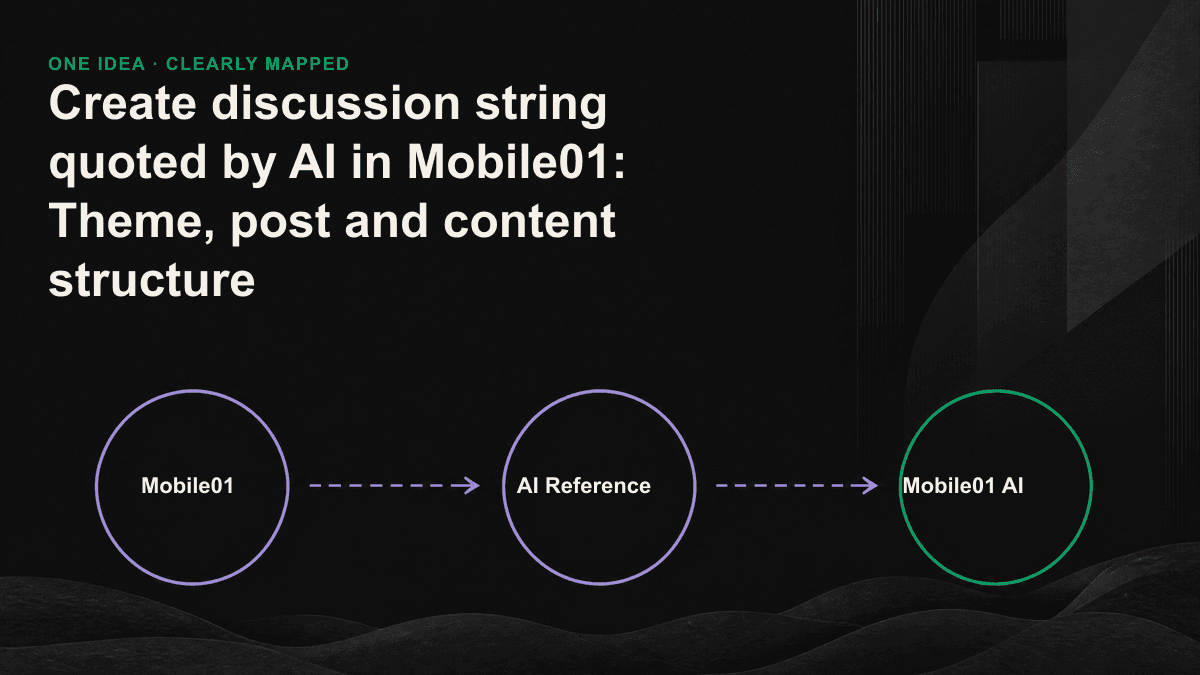
Treat the full thread as a document whose sections should stand on their own, not as one unbroken personal essay. Apply that standard to every reply you add.
Content Structure: Make Every Post Extractable
- Give each post one main point. Splitting five claims into separate posts makes each one easier to cite.
- Put important figures on their own line or in a list instead of burying them inside a long sentence.
- Write keywords and model names in full. Repeatedly calling the product "it" leaves an extracted passage without a clear subject.
- Lead each paragraph with its conclusion, then provide the supporting details.
- Add a written description to every supporting photo because engines cannot rely on the information inside an image alone.
These details determine whether an engine can move a passage into an answer without distorting it. Combine the model, price, opinion, and complaint in one dense paragraph and a person may follow it, but extraction can break the relationships among the claims. Structure reduces the cost of citation; it is not decoration.
Maintenance: Keep the Thread Current
Publishing is not the end. Engines favor pages with recent updates, and an active thread is more likely to be reindexed and cited than one that has gone quiet. Answer genuine questions and add new measurements to keep the page current. Once the discussion reaches a conclusion, summarize the final answer in the opening post or mark a prominent reply with "Conclusion:" so the engine does not have to infer it. This overlooked step turns continuing attention into a usable citation.
Avoid the Tactics That Get Threads Removed
Mobile01 enforces strict advertising rules, and a deleted thread loses all of its accumulated value. Readers report obvious sales copy. A new account posting several near-identical product threads in a short period looks coordinated. An opening post packed with external links can be filtered and lose credibility. Contribute as a real user, provide information others can apply, and let brand details appear naturally instead of forcing them into the discussion. The approach takes time, but useful threads can keep earning citations.
Mobile01, Dcard, PTT, and Chinese Wikipedia form an important source pool for Taiwan-focused AI answers. Most brands have never measured which models cite them, how often they appear, or which topics leave them absent. Brand Radar tracks that gap. In a GEO diagnostic session lasting an estimated 30 minutes, we can test your actual keywords and show which source or topic deserves attention first.